.png?width=200&height=100&name=FJ%20white%20colour%20(400%20x%20200%20px).png)
What is Signal Calibration?
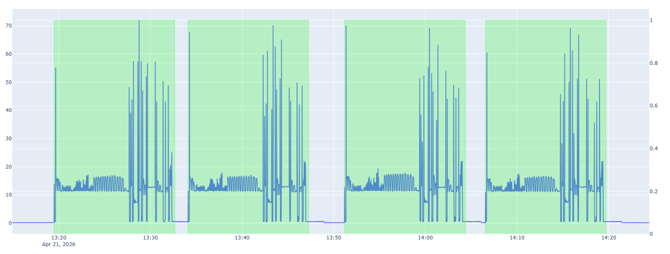
FourJaw uses current clamp sensors installed inside your machine’s electrical cabinet. These sensors measure the electrical current (amps) your machine consumes over time, creating a data trace.
Signal calibration is the process of tuning our algorithm to interpret this electrical data and correctly determine:
- When your machine is running (uptime)
- When your machine is stopped (downtime)
This step is essential to ensure the insights you see in FourJaw reflect your machine’s real activity. Below is an example of a typical signal calibration.
How the Process Works
- Sensors are installed on your machine to capture electrical data
- The data is analysed to understand machine behaviour patterns
- Our specialists configure and fine-tune the system to accurately classify uptime and downtime
Who Performs the Calibration?
A FourJaw specialist will handle the calibration for you:
- Remote installs (self-install): Calibration is completed remotely after setup
- Kickstart installs: Calibration is carried out on-site during your visit
There’s nothing you need to do during this process.
When Will My Data Be Ready?
Signal calibration typically takes 1–2 days after installation.
During this time:
- Your machine data may not appear correctly straight away
- This is expected while we fine-tune the system
Once calibration is complete, your machine monitoring will be accurate and ready to use.